Penned By Board Member, Alo Pal
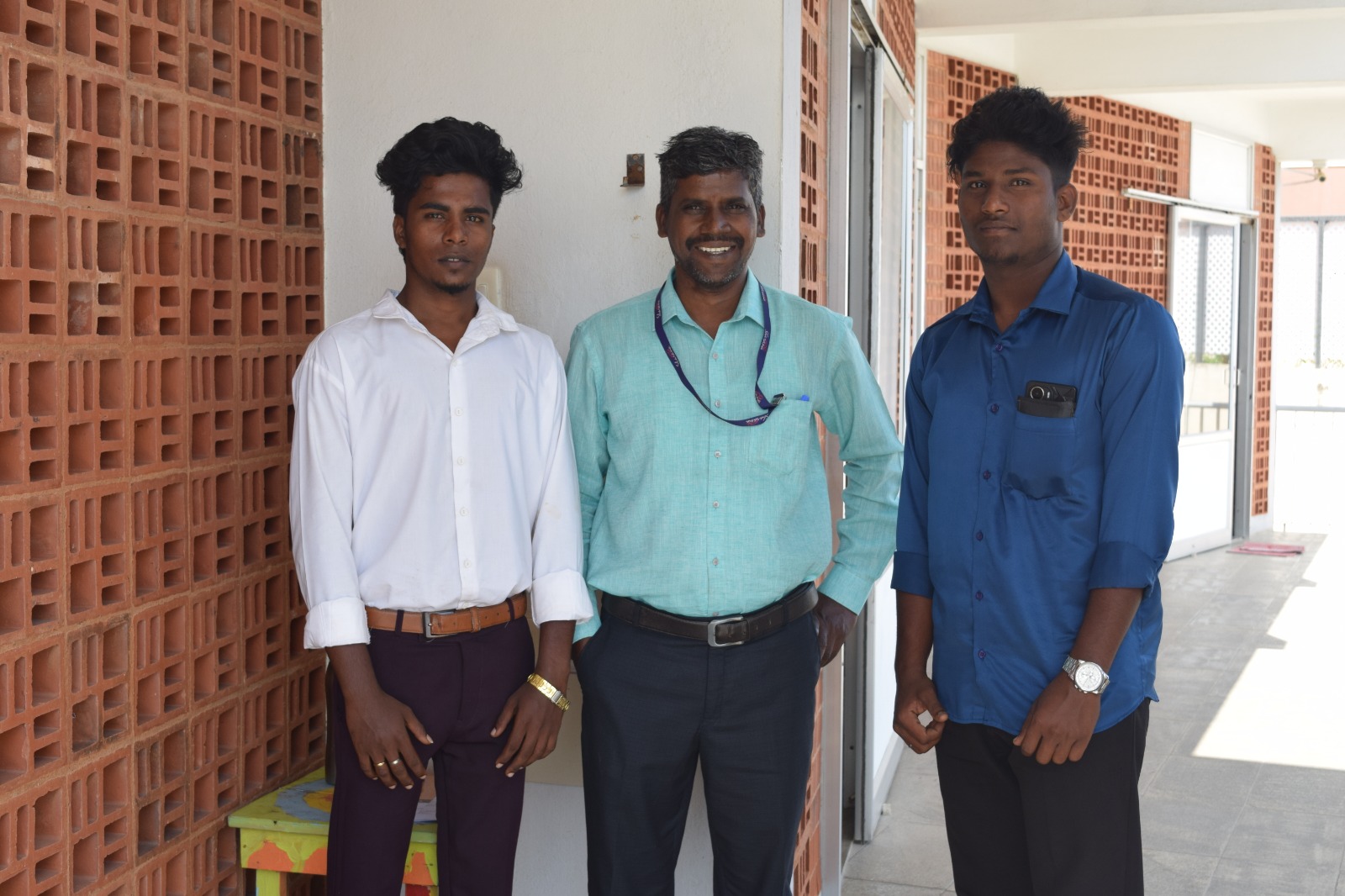
Chandru (in a white shirt) and Selvaraj (in a dark blue shirt), alongside our Program Manager, Anbazhagan.
Selvaraj is 19. He has bought a Bajaj Pulsar, makes up to 50,000 a month. His friend Chandru, also 19, has bought a Dio scooty and earns as much. Both come from single-parent households from T. N. Palayam and a neighboring slum. Selvaraj’s father, an alcoholic, is a daily wager, and Chandru’s mother, who lost her husband to alcoholism, is a cleaner in a restaurant. Both boys, neatly dressed, well-groomed, smartphones in their breast pockets, sit in front of me with Anbazhagan and Manuel, our program managers, to tell me how they got there.
Selvaraj comes from T. N. Palayam, a slum largely inhabited by the Irular community. Sharana’s work with the community since 2017 can be seen here. Even while he was studying for his 10th and 12th, he used to do odd jobs such as fruit plucking and being a helper in painting, masonry, electrical, and plumbing jobs. After completing his 12th, he applied to go to college and secured admission through the sports quota, but had to abandon it due to his father’s poor health. Sharana had been supporting Selvaraj’s education since 2017, and Chandru Sendirassegarane , our social worker, spoke to him about the prospects with skilling.
Meanwhile, Chandru, Selvaraj’s best friend from a neighboring village, lived a similar story. He lost his father prematurely to alcoholism. His mother, unlettered, worked as a cleaner in a restaurant and struggled to support her two children. Chandru too passed his 12th even as he did odd jobs to support his mother. He too had to abandon college plans due to financial constraints. He came to know of the possibility of vocational training and upskilling from Selvaraj, and both were guided by Sharana’s Anbazhagan and Chandru Sendirassegarane to endure nine months without supplementary income from odd jobs and concentrate on the course of AC mechanic at the Swami Vivekananda Rural Community College that Sharana was going to fully sponsor.
Their lives changed when they were campus-recruited by Whirlpool as interns for a three-month stint in Coimbatore. From subsisting on the meagre wages of single-parent households and toiling for a pittance with uncertain income doing odd jobs, both boys had a stable stipend of Rs. 15,000/- a month and earned in proportion to the number of calls they attended and the quality of their work. In those three months, both averaged an income of about Rs. 60,000/- monthly. At the end of the internship, their jobs became permanent.
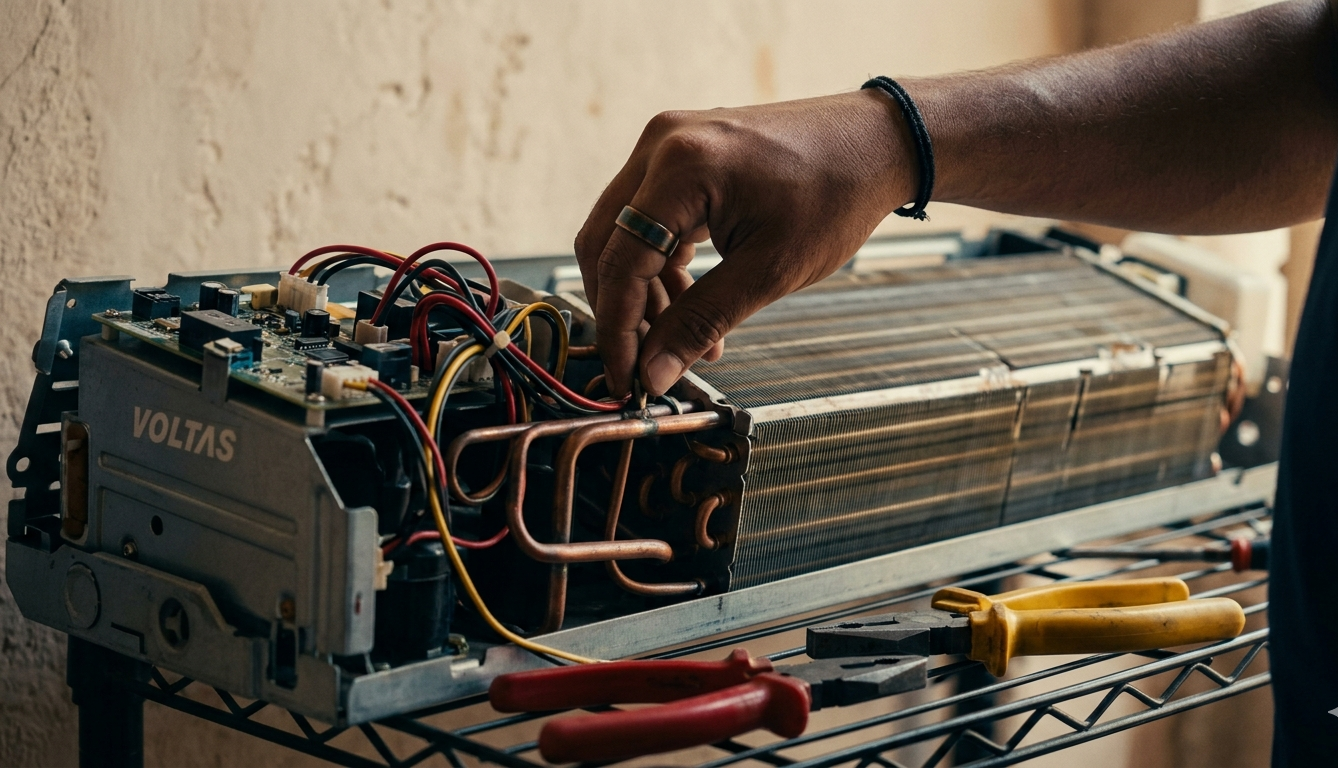
Today, both friends live in company accommodation. They work hard six days a week and make anywhere between Rs. 40,000/- to Rs. 50,000/- a month. Few outcomes can illustrate better the essence of the Sharana model of intervention—a visibly improved standard of living.
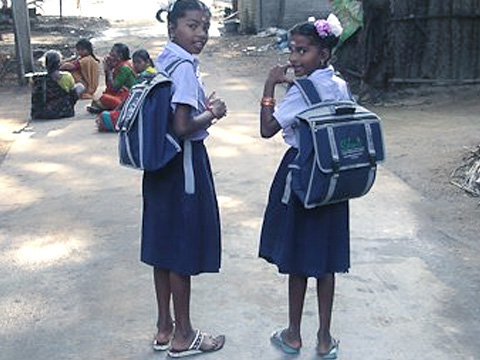
But it is the intangible in this story that lingers, some as a consequence of Sharana’s touch and some exemplifying the beauty of humanity. When Sharana started work at T. N. Palayam, the Irular children were unkempt, disheveled, with dirty uniforms and irregular at school. They sat in the classroom segregated from the other children—an arrangement that suited the comfort level of both categories of students. Over time, with persistent intervention and counselling, the children’s attendance improved, as did their personal hygiene, and the segregation at school disappeared automatically.
While Chandru finished his 12th and upskilled, his mother is putting his older sister through college with her own efforts, and his sister aspires to be a police officer. Both boys have requested their respective surviving parents to rest and retire, though Chandru’s mother still works as she values her work for the autonomy it brings her. Both boys are conscious of the consequences of alcohol addiction and spend their Sundays mostly at home resting, thereby limiting peer influence. What is more, they are both intent on systematic savings to one day start their own business.
The most touching part is that Selvaraj deposits his salary in his father’s account. He has given him an ATM card, but his expenses are monitored via text message notifications on his brother’s phone, and Chandru deposits his salary in his sister’s account.
As for Sharana in their lives, both testify that Sharana was the only place where they felt they could open up about their difficult situation and their aspirations—the only safe space where they knew they would be heard and cared for.