Penned By Communications Manager, Aditi Mandali
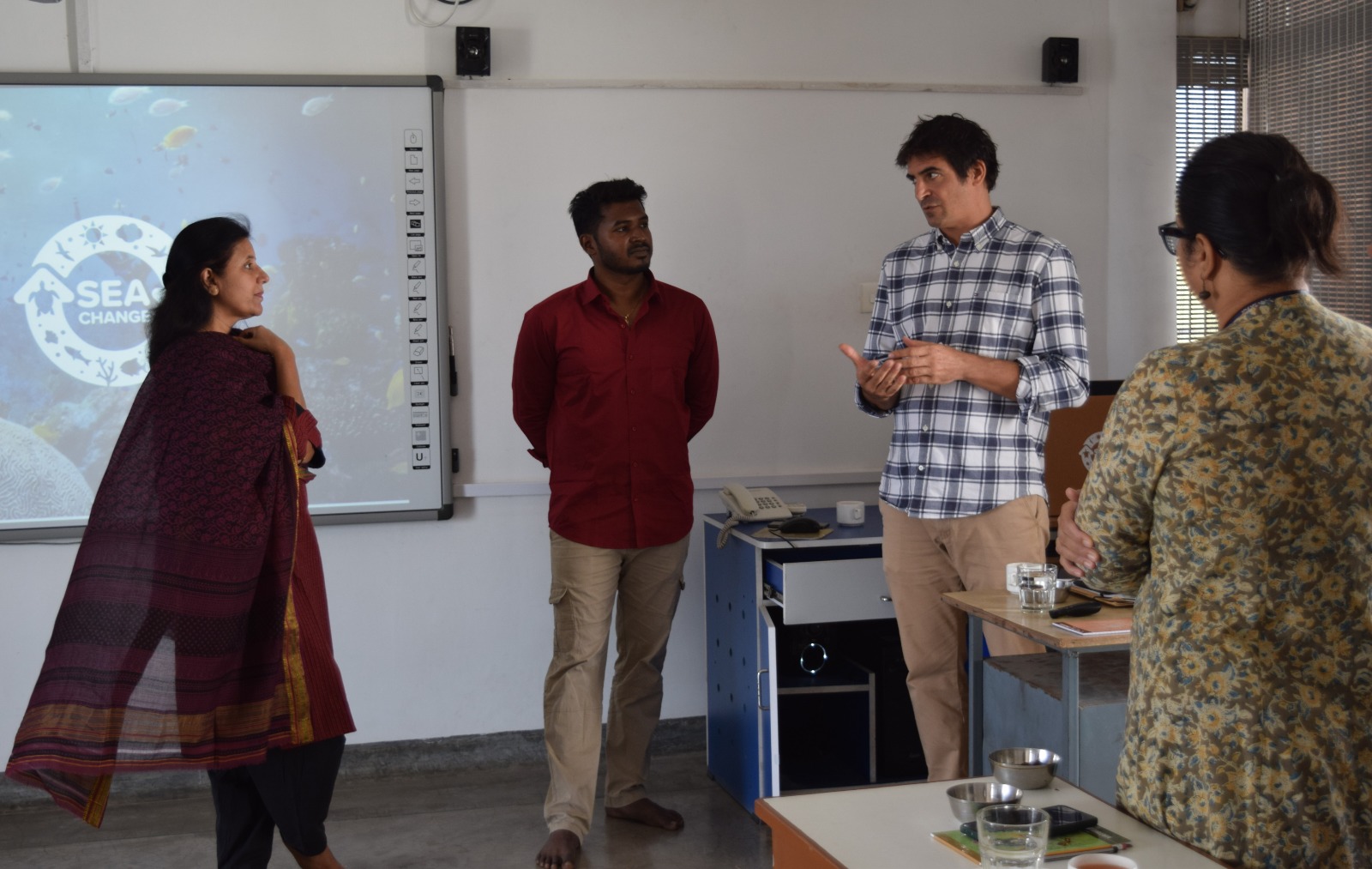
Founder/President Rajkala Partha meeting Ribhu Vohra and Dinagar
Our Seeds of Change team, along with our Operations Director Vandana Shah, attended a two-day immersive training with WasteLess, an organisation based in Auroville that focuses on environmental education and sustainable waste behaviour, particularly among children. This collaboration had been long in the making, a shared intention we had carried for quite some time, and it was deeply meaningful to finally see it come to fruition.
The training centred around their initiative, Sea Change, an innovative educational program designed to reduce marine plastic pollution at its source by educating young minds. Rather than speaking only about cleaning beaches or managing waste after it accumulates, Sea Change shifts the conversation to something deeper; how we understand waste, how we produce it, and how our everyday choices ripple outward into ecosystems far beyond our sight.
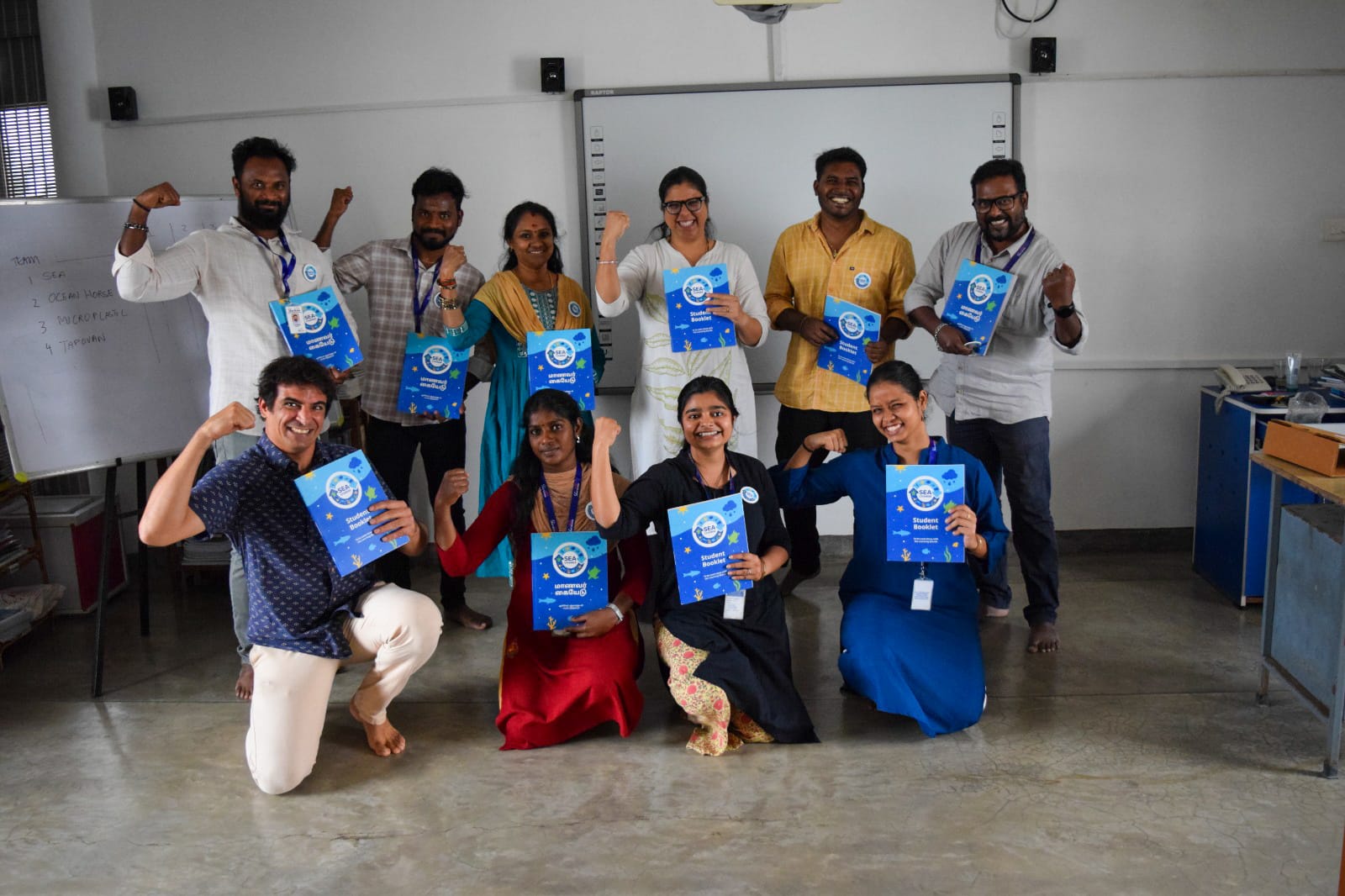
Sea Change explains the microplastics cycle, presenting it much like the water or carbon cycle. This simple yet powerful framing helps children understand that plastic does not disappear when thrown away; it breaks down into microplastics, enters soil and water systems, travels through rivers into oceans, and eventually finds its way into marine life, the air we breathe, and even the food we eat. In this way, “away” becomes an illusion, and waste is understood as part of an interconnected system.
The training was facilitated by Ribhu Vohra, Co-founder of WasteLess and a NetGeography Explorer who works at the intersection of ecology, learning, and systems thinking, along with his team member Dinagar. They guided us with warmth and clarity. Over the two days, our team went through the full five-chapter program in a simulated format, engaging in informative sessions, hands-on experiments, interactive games, and discussions.
Along the way, we were introduced in depth to the pedagogical methods they use:
how they structure concepts
how they build curiosity
how they layer information
how they encourage reflection
-
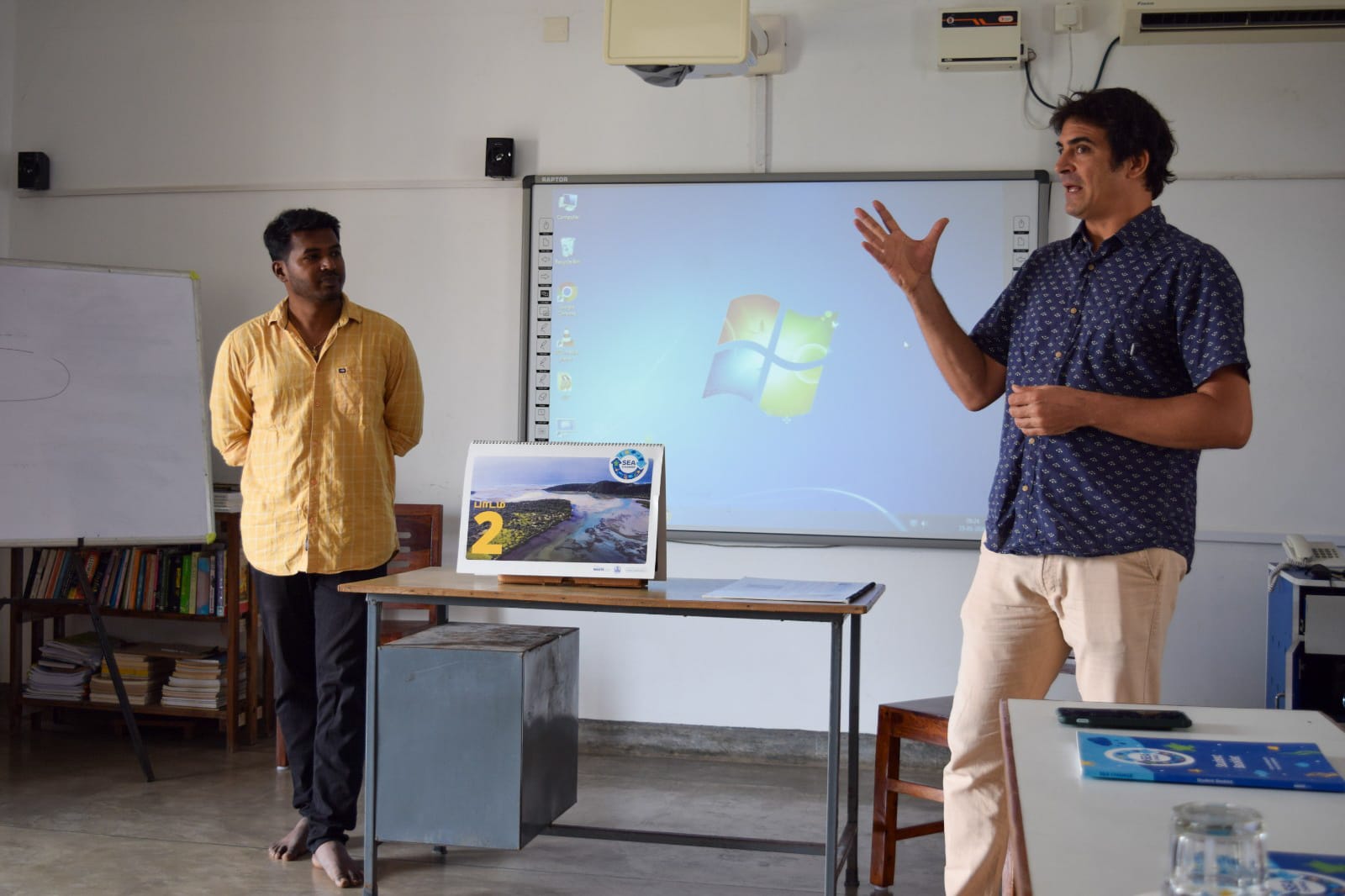
Ribhu Vohra & Dinagar facilitating the training
- This gave us the opportunity not only to understand the framework but also to carefully observe how most effectively we could implement it within our own context, and where adaptations might be required to suit the communities we work with. It became a space of learning and evaluation at the same time, allowing us to reflect on both content and delivery.
- At different points, members of our own team stepped into the role of facilitators, practicing how to conduct the sessions ourselves. This allowed us to internalise not only the material but also the rhythm and intention behind each activity. It was energising to see how experiential learning can spark curiosity and ownership. The approach remained empowering, encouraging children to see themselves as active protectors of the oceans rather than passive observers of a crisis.
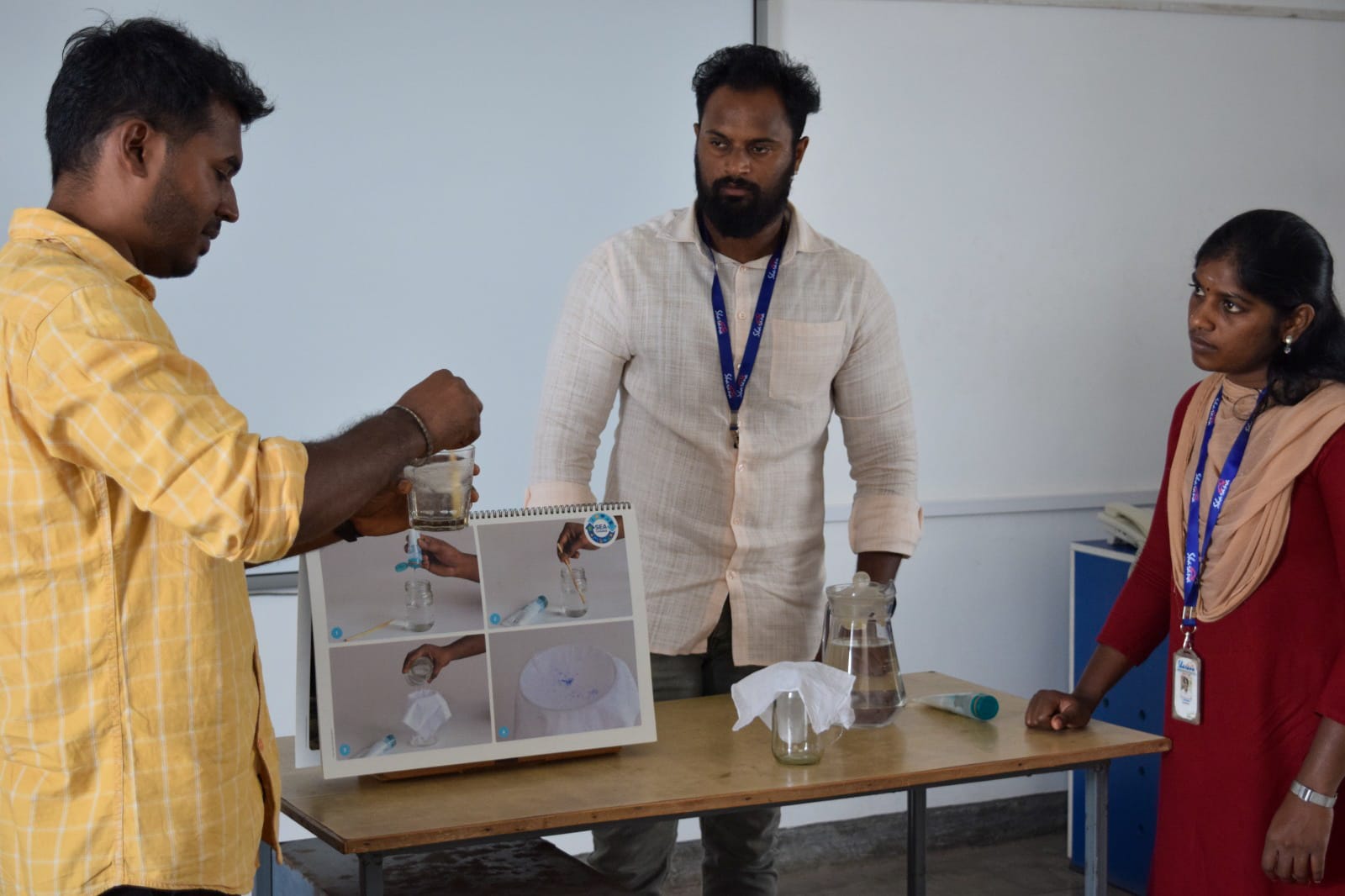
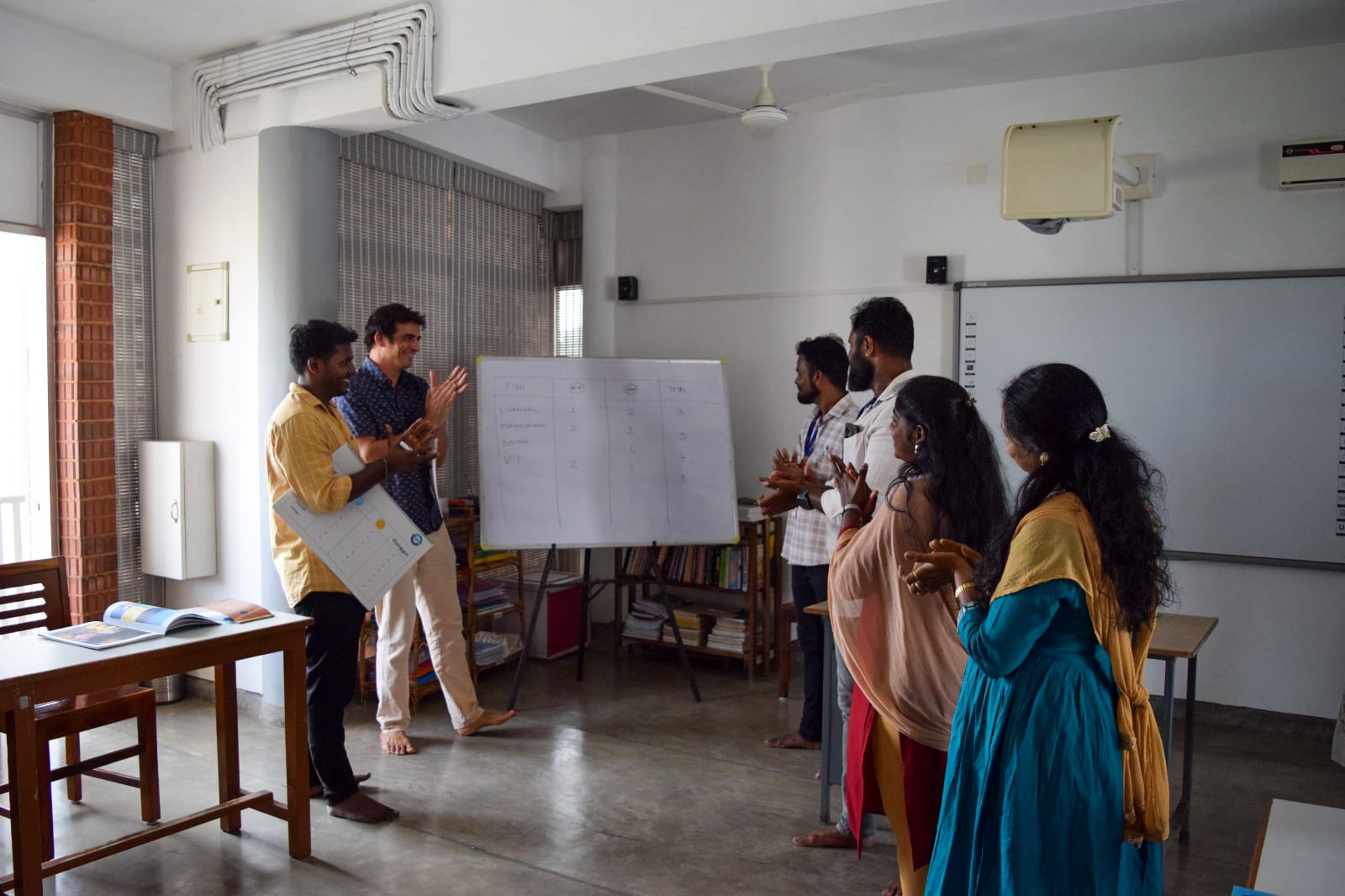
- What resonated most strongly with us was how thoughtfully Sea Change makes a complex and urgent issue accessible to children. The curriculum breaks down the science of marine plastic pollution and microplastics into simple, engaging concepts that young minds can easily grasp. It creates awareness without overwhelming them, presenting facts in a way that is honest yet hopeful. Rather than instilling fear about the state of our oceans, the programme focuses on understanding, responsibility, and possibility. This balance is powerful, because fear rarely inspires meaningful action, but clarity and confidence do. By helping children comprehend the issue in a calm and constructive way, Sea Change nurtures informed awareness while empowering them to believe that their choices can truly make a difference.
- As a team committed to addressing key environmental issues, we see immense value in bringing the Sea Change curriculum into our existing Seeds of Change program — with a touch of Sharana. We hope to thoughtfully weave it into our approach by integrating expressive arts, reflective dialogue, and community-based activities that resonate with the children we work with. We also plan to introduce this curriculum at our Annual Summer Camps, allowing it to reach a wider group of young participants in an immersive and creative format.
-
Our shared vision is to nurture informed, conscious young individuals who are equipped not just with knowledge, but with the mindset and confidence to act responsibly. We are genuinely excited to see where this collaboration with WasteLess will lead us; how it will evolve, deepen, and open new pathways for learning and environmental stewardship in the years to come.
- The two-day training left us inspired and motivated. We returned with practical tools, new insights, and renewed conviction that change does not begin in the vastness of the ocean; it begins in classrooms, in conversations, in small moments of realisation.